
Car Towing

Wheel Lift Towing | Slide-in Wheel Lift | Hidden Wheel Lift
Towing Company, Towing Service

Wheel Lift Towing: Slide-in and Hidden, Their Difference and Advantages

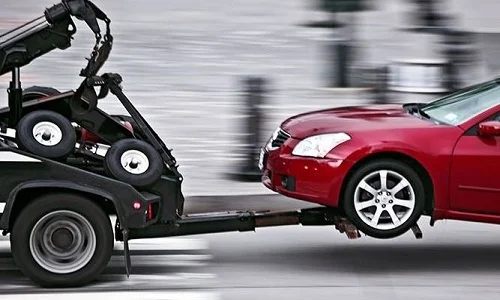
There are many options in choosing a tow truck. One of the towing method: the wheel lift, is a preferred method for repo companies and towing companies. We will discuss what is slide-in and a hidden wheel lift, what are their differences, and their advantages. Slide-in Wheel Lift and Hidden Wheel Lift If you know about wheel lift towing, then you will understand that both hidden and slide-in wheel lifts function in almost the same way. They possess arms or hooks which can move around and go under the wheels of a towed vehicle. When the arm is secured in place, the tow truck will lift the front or rear pair of wheels off the ground. This towing method is preferrable for light duty and short distance towing. The wheel lift allows the tow truck to have control of the vehicle. What is a Hidden Wheel Lift It is also known as an under-mount or underbody wheel lifts. The arms of these wheel lifts are attached below to the trucks. The main advantages of underbody wheel lifts are they provide space for the truck bed and the wheel lifts are out of sight. However, it is not easy to install the wheel lift to a truck. Thus, many will need modification to the frame of the truck to be installed. The mounting position will therefore gather more weight at the rear portion frame of the truck. It can lead to damage to the truck frame. The mounting position of the wheel lift will also affect lifespan and service accessibility. It is hard to get access to the arm of a hidden wheel lift, so it takes a longer time to service. If a replacement is necessary, the hard to reach position makes replacement difficult. Since the wheel lift is fixed below the frame of the truck, it is exposed to all forms of mud, dirt, debris, and other obstacles as the truck travel on the road. It will naturally wear down the wheel lift faster, and it is no surprise that it has a shorter lifespan compared to a slide-in wheel lift. What is a Slide-In Wheel Lift The slide-in wheel lift is the favorite for most repossession and towing businesses. To install it, simply slide the wheel lift into the bed of a truck. This will reduce the bed space of the truck, but as towing is the main use for such trucks, the reduced bed space is not an issue. Although there is a need to do some assembly, this wheel lift will not need any modifications to the frame of a truck for installation. Unlike the hidden wheel lift, the slide-in wheel lift is located on top of the truck, thus it will not expose itself to the same harsh conditions which can shorten its lifespan. The mounted position of a slide-in makes weight distribution more balanced. This significantly improves the safety of the vehicle as compared to a hidden wheel lift. Another advantage is the slide-in wheel lift is transferable from one truck to another. So if one truck has expired, the wheel lift can be disassembled and move to another truck. This makes the slide-in wheel lift versatile, and which is why towing companies and repossession companies will favor it as invaluable equipment. Due to its versatility, the slide-in is ideal for light duty towing and repo towing. It can pick up vehicles from tight spots easily, and dropping off vehicles at impound is a breeze. This can save the towing truck drivers’ time and thus making their works more efficient. Wheel Lift and Wrecker One of the more common wreckers or tow trucks is the flatbed tow trucks. They can be seen in towing, roadside assistance, and accident removal. When wreckers reached their maximum mileage, they need to be replaced with new tow trucks. On the other hand, a slide-in wheel lift has significantly lower investment costs and is transferable from truck to truck. This is possible even when the current truck installed with the wheel lift has expired. This saves the costs of making a new investment in new tow trucks. One major advantage of wheel lift is the ability to move in tight parking spaces and low clearance parking lots. The wheel lift truck can maneuver in the small-spaced environment and pick up vehicles with relative ease. It is simply the best option in repo, short distance, and light duty towing. For 24-Hour Towing Services & Roadside Assistance in Los Angeles, Please Call Green Towing Los Angeles

Towing Service

Electric Cars – To Tow or To be Towed

Electric cars are gaining popularity over the years. They are more environmentally friendly compared to conventional gasoline cars because they do not release carbon emissions. As they are charged using electricity, this helps reduce greenhouse gas emissions, ad consequently improves the air quality of the environment. Maintenance for electric cars is not as frequent, since they do not operate on gasoline or petrol, and the brakes of electric cars are less likely to wear off quickly as to a regular car. They also run more quietly; the noise made by them compared to conventional cars is reduced greatly. With so many benefits of using an electric car, it will undoubtedly become a norm to see them on the roads in the future. However, can electric cars be towed, and can they be used for towing? Towing an Electric Car Electric vehicles are not indestructible, so a vehicle breakdown is still possible. Some electric cars, unlike gasoline cars, do not have a neutral position in the transmission. When they are not moving in the forward direction or backward direction, the motor will still be connected to the wheels. So when towing such electric vehicles, the moment the wheels turn, this will also turn the motor connected to the wheels, and this might lead to damage to the motor. For cars without the cooling system working, the overheating from turning the motor at high speed can destroy the motor. For some electric cars, such as Nissan Leaf with front-wheel drives. With the front wheels lifted, there is a lesser risk of causing damage. Also, there is a neutral mode for the transmission, so it can disconnect the motor from the drive-train. If there is any need to tow an electric vehicle, do refer to the owner’s manual for instructions. Generally, it is advised to use the flatbed towing method to move electric vehicles. Can an Electric Car Tow? It is possible to tow trailers with an electric vehicle. However, there are several points to take note of if one intends to do so. Most of the manufacturers do not make electric cars for towing, because they are not tested for towing abilities. There are several reasons for not doing so. Firstly, electric or hybrid cars are marketed mainly on their efficiency and performance, if the vehicle is to put in tests for towing, this will like to have impacts on the efficiency, performance, and mileage. Thus car manufacturers are unlikely to test and release the ratings if they are poor performing. Secondly, the safety of using an electric car to tow is a major concern. Hybrid or Electric engines are heavier than regular petrol or diesel cars. With such excess weight added to the vehicle, the towing performance and safety are going to be affected. Not forgetting when brakes are put under the extra weight, cars will less likely to slow down in anticipated time. Thirdly, hybrid and electric cars have regenerative braking functions. Rather than using the brake pads to stop motion to slow down, with regenerative braking function, the energy moving the vehicle is which is making the car move is transferred back to the battery. If an electric vehicle was to tow a trailer downhill, there will be much strain put onto the vehicle, leading to problems to the brakes and engines. Lastly, the efficiency of an electric vehicle will be affected after towing a load. However, there are still some electric car brands on the market that can tow. An example is Tesla Model X, as it has the capacity of towing weight up to 5500 pounds. This means that it can pull trailers with relative ease. For 24-Hour Towing Services in Los Angeles, Please Call Green Towing Los Angeles

Towing Service

Can Towing Cause Damage to an Automobile

It is never a great day to have your vehicle to be towed. Some drivers may have experienced vehicles breaking down for some unknown reason that cannot be fixed or diagnosed on the road. In most scenarios, they end up calling towing services for assistance. However, many people are doubtful about having their automobiles towed, assuming that it might be damaged during the process. This is not an unusual concern; while it is possible for the vehicle to experience harm when handled by people who do not know how to tow, it is unlikely when managed by professional tow truck operators. If towed incorrectly, additional damage can occur to vehicles. Beyond bad operator error, you really should expect no damage if towing is done accurately. Neutral Transmission When the tow operator arrives at your location, the tow truck driver will ask you to put the vehicle in neutral. Towing a vehicle without getting it in neutral is like to cause damage to it. This is because if not put in neutral, the tires will not turn when being towed along the road. Not only will this cause damage to the connections between the transmission and wheels, but it also will lead to wear and tear, as well as skidding to the tires. Engaging a vehicle in neutral is less likely to cause damage to it. However, it does not mean it is damage proof. Damage is still likely to occur if the vehicle is towed over long distances with wheels on the ground. Turning the wheels over a period of time will lead to overheating to the transmission as the engine is not able to assist in regulation. Towing Two-Wheel Drive Vehicles When towing two-wheel vehicles, it is vital to note the type of transmission the vehicles have. Vehicles with a manual transmission are less susceptible to the possible harms. As for two-wheel drive automatic transmission vehicles, short distances are fine, but towing over long distances will take a toll to the vehicle. In addition, towing should be done at low speeds for automatic transmission vehicles. The Right Approach for Four-Wheel Drive Vehicles Towing all-wheel-drives or four-wheel-drives are unique situations. Depending on the transmission design and transfer case, the towing process can get complicated by the aforementioned items. The vehicle is limited to towing over short distances at slow speeds for certain designs. The safest approach is to remove the rear drive shaft temporarily and tow the rear wheels on the ground. It is recommended to check the owner’s manual for towing instructions. Keep The Owner’s Manual As there are improved and new automobiles up and about on the roads, there are times when towing operators may not tow the vehicle in a suggested way. Should this happens, speak up and talk to the towing operators. One way to correct or help them (which in turn helps yourself) is to keep the owner’s manual with you in the vehicle and refer it to the towing operators should they need guidance. Flatbed Towing Whether it is to haul the vehicle from the front or back, flatbed towing is able to minimize the chance of damaging the axles or transmission. This is because it has a winch system to pull the vehicle onto the platform or the rear end of the flatbed tow truck, and the wheels will not come into contact with the ground while towing. The towed vehicle will be secured with towing straps or chains in a stationary position while being transported. Remain Calm One of the most important issues you can do when waiting for help is to stay calm. Try to pull over at a safe and secure spot if possible, and call for roadside assistance. Towing can be technical which requires specific equipment and training. Without the knowledge and experience, towing by your own can cause unnecessary damage to the vehicle. A wrong decision will lead to expensive repairs. In addition, depending on the roadside situations, it can also put the driver in a possibly unsafe condition. For 24-Hour Towing Services in Los Angeles, Please Call Green Towing Los Angeles